Frequently Asked Questions

Here are answers to some commonly asked questions.

  • Who is Maria Montessori?

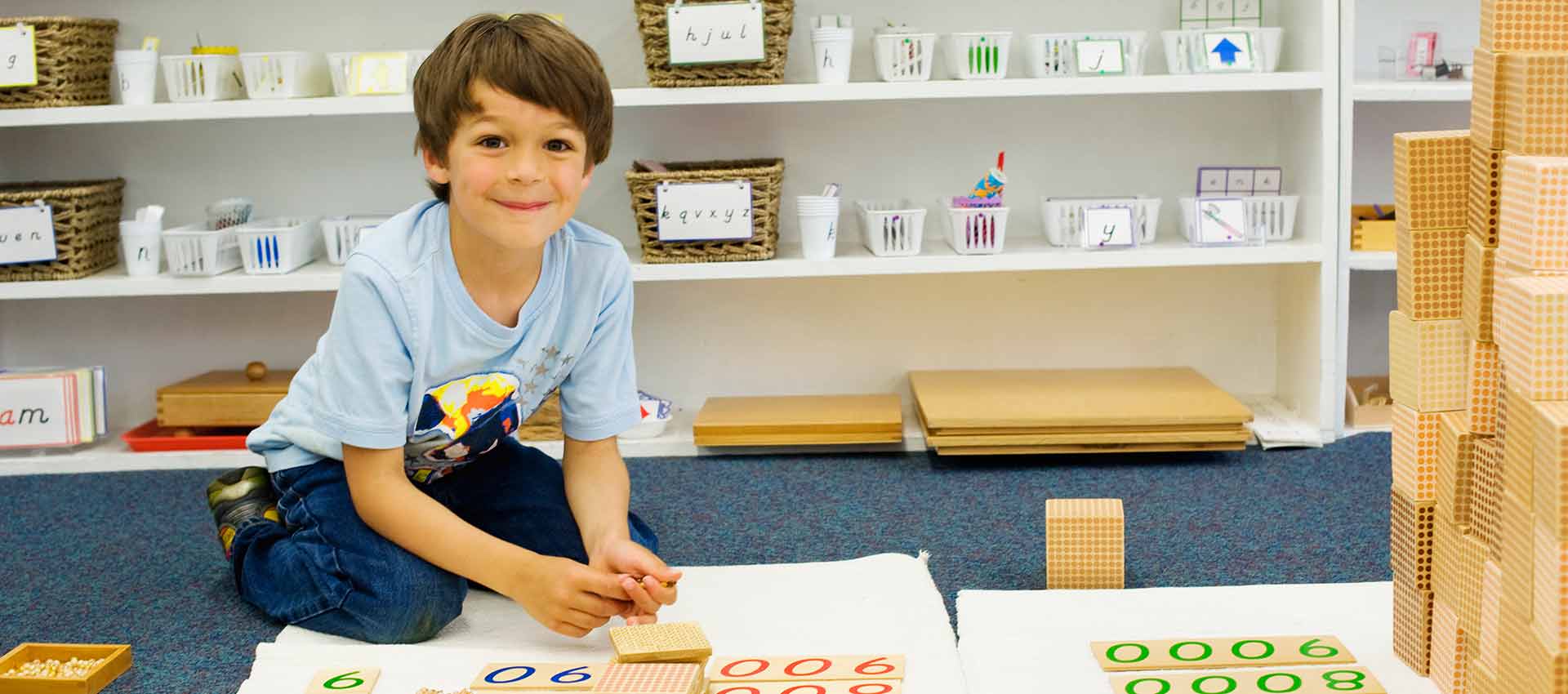
    Maria Montessori was born in 1870 in the small town of Chiaravalle in Italy. She graduated in 1896 with a degree in medicine making her the first female physician in Italy. While she was successful in the medical community, her real desire was to help children. In 1906, she gave up medical practice to work with children in the San Lorenzo district of Rome. During this time, Maria Montessori carefully observed these children and developed her method. She discovered through her observations that the children were best able to absorb knowledge through materials that they were able to manipulate within their natural surroundings.

  • What is the Montessori Method?

    The Montessori Method is about a way of life. It is about giving children the experiences that will bring them to the conclusion that humans are only a part of the Universe that was once darkness. It is about promoting peace among people of all nationalities. It is about taking care of the environment. It is about respect and independence.

  • How is a Montessori classroom different from that of a traditional classroom?
    MONTESSORI TRADITIONAL
    Emphasis on cognitive structures and social development Emphasis on rote knowledge and social development
    Teacher’s role is unobtrusive; child actively participates in learning Teacher’s role is dominant; child is a passive participant
    Environment and method encourage self-discipline Teacher is primary enforcer of discipline
    Mixed age groups Same age groups
    Children are encouraged to teach, collaborate and help each other Most teaching is done by the teacher and collaboration is discouraged
    Child sets own pace to internalize information/knowledge Instruction pace set by group norm or teacher
    Organized program for learning care of self and self-directed care of environment Little emphasis on instruction and classroom maintenance
  • When is the best time to enroll my child?

    Dr. Montessori observed that between birth and 6, a child has an ‘absorbent mind’ which allows them the motivation necessary to work with materials within a prepared environment perfecting skills and understandings. The child needs love, warmth and protection, and concern for all his physical needs. By the age of three, the child is ready to have separation from his home environment. The carefully planned environment of a Montessori primary classroom gives the child a combination of liberty and structure necessary in developing his independence.

  • What are the qualifications of a Montessori Directress/Director (teacher)?

    Dr. Montessori found that it is best to age group children together therefore she developed levels of education within her method. Primary – age3-6; Lower Elementary age 6-9; Upper Elementary age 9-12; and Middle School age 12-15. To become a directress or director, one must possess a bachelor’s degree in any subject area and special certification for the Montessori level they desire to work within.

  • What is the teacher - student ratio?

    The Montessori School of Westminster has a teacher to student ratio of 1:8.

  • What kinds of experiences may a child have when he transitions from a Montessori to a more traditional setting?

    “Montessori School of Westminster taught me to be responsible, self-reliant, and gave me the will to want to learn more on my own. MSW always encouraged us to have personal relationships with our teachers and this greatly benefitted me once I went on to Garrison Forest because I wasn’t afraid to ask my teachers for help.”

    - Alyssa, attended Montessori School of Westminster age 3 through grade 8

  • What accreditations and/or affiliations does the Montessori School of Westminster have?

    The Montessori School of Westminster is affiliated with the American Montessori Society (www.amshq.org) and is approved by the Maryland Department of Education. The Montessori School of Westminster is the only private school in Carroll County accredited by the Association of Independent Maryland Schools (AIMS, www.aimsmd.org).

Back to top